
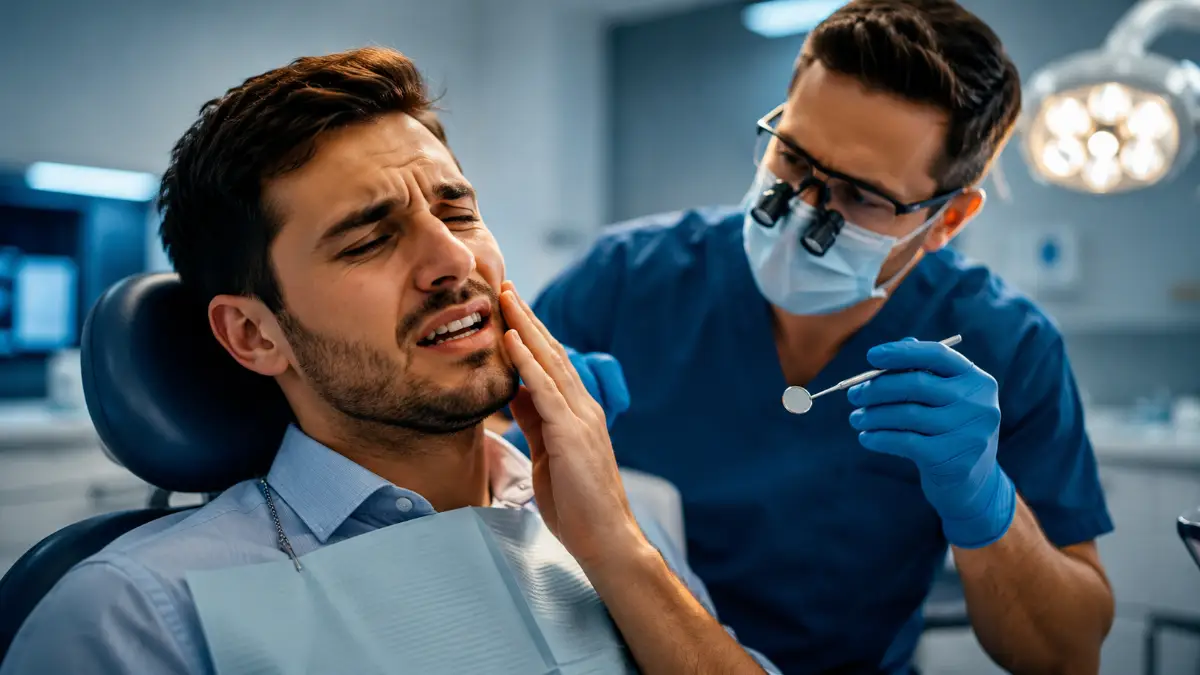
Severe tooth pain, a knocked-out tooth, or sudden facial swelling can become urgent quickly. Finding an emergency dentist who can evaluate you the same day may help control pain, treat the underlying dental problem, and improve the chance of saving an injured tooth.
This guide explains what may qualify as a dental emergency, when to contact a same-day dentist, when a hospital emergency department is more appropriate, and what to do before you are seen. It is not a diagnostic tool. If you are uncertain about the seriousness of your symptoms, contact a dental professional or seek medical care rather than relying on self-assessment.
What Counts as a Dental Emergency?
A dental emergency generally involves significant pain, uncontrolled bleeding, infection, or trauma that needs prompt professional assessment. The goal is not simply to relieve discomfort, it is to treat the cause before it worsens.
Some problems can usually wait for a regular dental appointment, such as mild sensitivity or a tiny painless cosmetic chip. Others should be addressed urgently.
Signs You May Need an Emergency Dentist
Contact an emergency dentist or emergency dental clinic promptly if you have:
- Severe or persistent tooth pain that does not improve or becomes worse over several hours
- A knocked-out permanent tooth
- A broken, cracked, or fractured tooth with substantial pain or visible inner tooth tissue
- Facial, jaw, or gum swelling
- A pus-filled bump on the gum, unpleasant taste, or drainage near a painful tooth
- Bleeding that does not stop after around 10–15 minutes of firm direct pressure
- A lost filling or crown causing sharp or continuous pain
- A dental injury that makes it hard to bite normally
- Fever alongside tooth pain or facial swelling
- Jaw pain with increasing difficulty swallowing
Facial swelling, fever, or worsening pain may point to an infection that needs urgent dental evaluation. Dental infections should not be managed at home or ignored while waiting for symptoms to settle.
Urgency Decision Framework
Not every dental concern requires the same response. This guide can help you decide how quickly to seek care, but it cannot replace advice from a qualified clinician.
Also Read: Smith Machine: Guide Proper Use, Benefits, Risks, and Workouts
| Urgency level | Typical symptoms | What to do |
| Immediate medical emergency | Difficulty breathing, difficulty swallowing, uncontrolled bleeding, rapidly spreading neck or facial swelling, suspected jaw fracture, serious facial trauma | Go to a hospital emergency department immediately |
| Same-day emergency dental care | Knocked-out permanent tooth, severe toothache, broken tooth with significant pain, visible swelling without breathing difficulty, dental abscess symptoms | Call an emergency dentist or same day dentist immediately |
| Urgent appointment within 24–48 hours | Lost filling or crown with discomfort, mild swelling without fever, cracked tooth without severe pain | Book an urgent dental visit |
| Routine appointment | Small painless chip, mild stable sensitivity, minor cosmetic issue | Schedule a regular dental examination |
Symptoms can change. Move to a higher urgency level if pain intensifies, swelling increases, fever develops, or swallowing and breathing become difficult.
Emergency Dentist vs. Hospital ER
An emergency dentist is usually the best choice for tooth pain, dental infection, broken teeth, lost crowns, and knocked-out teeth. A hospital emergency department is the right choice for airway concerns, uncontrolled bleeding, major trauma, or a suspected jaw fracture.
Hospital emergency departments can evaluate serious medical complications, manage severe trauma, and provide immediate support when breathing or swallowing is affected. However, most ERs do not have a dentist available to repair a tooth, perform a root canal, replace a filling, or complete other dental procedures.
| Problem | Best place to seek care | Reason |
| Severe toothache | Emergency dentist | A dentist can identify and treat the dental cause |
| Dental abscess or localized swelling | Emergency dentist | The tooth or gum source may need dental treatment |
| Knocked-out permanent tooth | Emergency dentist as soon as possible | Prompt action may improve the chance of saving the tooth |
| Broken or cracked tooth | Emergency dentist | Dental tools and materials are needed for repair |
| Bleeding that stops with pressure | Emergency dentist | The underlying dental injury still needs assessment |
| Bleeding that will not stop | Hospital ER | May need urgent medical evaluation |
| Major facial injury or suspected fractured jaw | Hospital ER | May require imaging and trauma management |
| Difficulty breathing or swallowing due to swelling | Hospital ER immediately | This may involve the airway |
What to Do Before You See the Dentist
The actions you take before reaching an emergency dental clinic can matter, especially after trauma. The following are general first-aid steps, not a replacement for professional dental care.
If a Permanent Tooth Is Knocked Out
A knocked-out permanent tooth needs immediate attention. The sooner it is assessed and, where appropriate, replanted, the better the prospects may be.
- Find the tooth and hold it only by the crown, which is the white part normally visible above the gum.
- Avoid touching the root.
- If the tooth is dirty, rinse it gently and briefly with clean water or milk. Do not scrub it.
- If possible, gently place the tooth back in its socket in the correct direction and bite softly on clean gauze to hold it in place.
- If reinsertion is not possible, keep the tooth moist in cold milk or saliva.
- Do not wrap the tooth in tissue, leave it dry, or store it in plain tap water.
- Contact an emergency dentist immediately.
If the injury also involves loss of consciousness, severe facial trauma, suspected jaw fracture, or uncontrollable bleeding, go to a hospital emergency department.
If a Baby Tooth Is Knocked Out
Do not reinsert a knocked-out baby tooth. A primary tooth should not be placed back into its socket because it may damage the developing permanent tooth beneath the gum.
Instead:
- Keep the tooth or fragment if possible
- Apply gentle pressure with clean gauze to control bleeding
- Offer a cold compress on the outside of the face for swelling
- Contact a dentist promptly for advice and assessment
A dentist may need to check the gums, nearby teeth, and develop a permanent tooth even if the baby tooth cannot be replaced. Guidance for children differs from care for a knocked-out permanent tooth.
If You Have a Broken or Chipped Tooth
A broken tooth may range from a small cosmetic chip to a painful fracture involving the inner pulp.
Until you are seen:
- Rinse your mouth gently with warm water
- Save any tooth pieces if you can find them
- Keep fragments moist in milk or saliva
- Apply a cold compress to the outside of the cheek
- Cover a sharp edge with dental wax or sugar-free gum if it is cutting your cheek or tongue
- Avoid chewing on the affected side
- Avoid very hot, cold, hard, or sugary foods
A crack can worsen over time, so do not assume a tooth is safe simply because pain fades temporarily.
If You Have Severe Tooth Pain
Tooth pain can be caused by decay, infection, a cracked tooth, gum problems, or an exposed nerve. Home measures may provide short-term comfort, but they cannot resolve the cause.
While arranging emergency toothache treatment:
- Rinse gently with warm salt water
- Use a cold compress against the outside of the cheek
- Avoid chewing on the painful side
- Avoid extremely hot, cold, acidic, or sugary foods and drinks
- Do not place aspirin, crushed tablets, alcohol, or chemicals directly on the gum or tooth
Placing aspirin against gum tissue can cause a chemical burn. If pain is severe, spontaneous, or associated with swelling or fever, seek same-day dental care.
Read More: Tubby Todd: Review Products, Ingredients, Prices, and Whether It’s Worth Buying
If You Have Facial Swelling or Suspect Infection
Facial swelling combined with tooth pain may indicate a dental abscess or another infection. It can worsen without treatment.
Do not try to pop, cut, squeeze, or drain a swollen gum area at home. This can increase injury and does not remove the underlying source of infection.
You can:
- Apply a cold compress externally
- Rinse gently with warm salt water
- Keep your head elevated when resting
- Contact an emergency dentist the same day
Go to a hospital emergency department immediately if swelling spreads toward the eye or neck, or if it causes fever, weakness, difficulty breathing, or difficulty swallowing.
Medication Cautions for Tooth Pain
Over-the-counter pain medication may help temporarily while you arrange dental care, but it does not treat infection, decay, a crack, or another underlying problem.
Ibuprofen and Other NSAIDs
Ibuprofen may be suitable for many adults with dental pain when used according to the product label. However, it may not be suitable for people with:
- A history of stomach ulcers or gastrointestinal bleeding
- Significant kidney disease
- An allergy or sensitivity to NSAIDs
- Certain bleeding disorders
- Some cardiovascular conditions
- Pregnancy-related restrictions
- Other medicines that increase bleeding or kidney risks
If you are unsure whether ibuprofen is safe for you, ask a pharmacist, doctor, or dentist. Acetaminophen, also called paracetamol, may be an option for some people, but it also has dosage limits and may not be suitable for those with certain liver conditions.
Antibiotics Are Not a Home Treatment
Do not take leftover, borrowed, or expired antibiotics for a toothache. Antibiotics require a current prescription and professional assessment.
Antibiotics are not needed for many cases of dental pain or localized swelling when prompt dental treatment is available. The American Dental Association advises prioritizing definitive dental treatment for most urgent dental pain and intraoral swelling in otherwise healthy adults, rather than relying on antibiotics alone.
A dentist or physician may prescribe antibiotics when there are signs of spreading infection or systemic illness, such as fever or significant facial swelling. Even then, antibiotics do not repair a decayed tooth, drain every abscess, or resolve a crack by themselves.
What Happens During an Emergency Dental Visit?
An emergency dental visit is designed to identify the cause of the problem, control pain, and prevent further damage. The exact treatment depends on your symptoms and examination findings.
A typical appointment may include:
- Examination and history: The dentist will ask when symptoms started, how an injury happened, what medications you take, and whether you have health conditions or allergies.
- X-rays or imaging: Images may help identify infection, decay, root injury, bone damage, or a hidden fracture.
- Pain control: Local anesthetic or other appropriate measures may be used.
- Emergency treatment: This can include a temporary filling, crown repair, tooth splinting, drainage, root canal treatment, or extraction, depending on the diagnosis.
- Follow-up plan: Some treatment may be completed immediately, while other work may be scheduled after pain and infection are controlled.
An emergency visit is not always the final stage of treatment. For example, a temporary repair may later need a permanent crown, or a root canal started during an urgent visit may need completion at a follow-up appointment.
Read More: Bonefish Grill: Menu, Locations, Happy Hour, and Everything You Need to Know
How to Find an Emergency Dentist Near You
When someone searches for an emergency dentist near me, they usually need help quickly. Search listings can be useful, but they do not always show whether a practice is accepting patients, treating your type of problem, or open after normal business hours.
Before traveling to a clinic, call first and ask about its hours, location, emergency services, walk-in policy, insurance acceptance, and estimated emergency examination cost.
Questions to Ask an Emergency Dental Clinic
- Are you open now, and can you see me today?
- Do you provide same-day emergency dental care?
- Are you a true 24 hour emergency dentist, or do you have specific after-hours availability?
- Do you accept walk-ins, or do I need an appointment?
- Do you treat my concerns, such as a knocked-out tooth, abscess, broken tooth, or severe toothache?
- Do you accept my dental insurance plan?
- What is the estimated cost of the emergency examination?
- What payment options are available if I do not have insurance?
- What should I bring with me?
Checking these details before leaving can prevent a wasted trip during a stressful situation.
Other Ways to Find Urgent Dental Care
- Call your regular dentist first, many practices reserve same-day appointments for existing patients
- Contact your dental insurance provider for in-network emergency dentist options
- Search for dedicated urgent dental care or emergency dental clinic services nearby
- Check local dental schools, which may offer lower-cost care supervised by licensed faculty
- Ask a local pharmacy or primary-care provider whether they can direct you to an available dental service
Do not assume every clinic advertising extended hours is open 24 hours a day. Verify current availability by phone.
How Much Does Emergency Dental Care Cost?
Emergency dental care costs vary widely depending on the location, clinic, time of visit, insurance coverage, and treatment required.
A basic emergency examination may cost less than procedures such as:
- Emergency tooth extraction
- Root canal treatment
- Abscess drainage
- Reattachment or splinting of an injured tooth
- Temporary crown or filling repair
- Dental X-rays
- Surgical treatment after trauma
Ask the clinic for an estimated examination fee before traveling. Once the dentist has assessed the problem, request a clear explanation of recommended treatment, expected costs, alternatives, and payment options.
Patients without insurance may wish to ask about payment plans, self-pay options, dental schools, or community health centers with sliding-scale fees.
Preventing Dental Emergencies
Not every emergency can be prevented, but a few practical habits can reduce the risk.
- Wear a properly fitted mouthguard for contact sports and activities with a risk of falls
- Avoid chewing ice, hard candy, popcorn kernels, or other objects that can crack teeth
- Never use your teeth to open packaging, bottles, or containers
- Attend routine dental checkups so weak fillings and decay can be treated early
- Address new tooth pain or gum swelling promptly
- Brush twice daily with fluoride toothpaste and clean between teeth regularly
- Replace damaged or loose restorations before they become painful emergencies
Early treatment is often simpler and less costly than waiting until pain or infection becomes severe.
Frequently Asked Questions
How much does an emergency dentist visit cost without insurance?
The cost depends on where you live, the clinic, the time of your appointment, and the procedure required. An emergency examination may cost less than treatment such as a root canal, extraction, abscess drainage, or crown repair. Ask the clinic for an estimated examination fee and whether X-rays are billed separately. If you are uninsured, ask about self-pay pricing, payment plans, dental school clinics, and community health centers that may offer lower-cost care.
Can a knocked-out permanent tooth still be saved after several hours?
The chance of successfully reinserting a knocked-out permanent tooth generally decreases the longer it remains out of the socket. Proper storage in milk or saliva may help preserve the tooth while you travel, but urgent dental evaluation is still important even if several hours have passed. If the tooth cannot be saved, the dentist can discuss replacement options after assessing the injury.
Is it safe to take ibuprofen for severe tooth pain?
Ibuprofen can help some people manage short-term dental pain when used according to label directions, but it is not suitable for everyone. People with a history of gastrointestinal bleeding, kidney problems, NSAID allergies, or certain other medical conditions should check with a healthcare professional first. Pain relievers manage symptoms only, they do not treat the dental cause.
What should I do if I cannot afford emergency dental treatment?
Call several clinics and ask about examination fees, self-pay pricing, and payment plans. Dental schools may offer lower-cost treatment under licensed supervision, while community clinics may use sliding-scale fees. Do not delay care for worsening swelling, severe pain, or infection symptoms solely because of cost, ask providers about available options.
Can a dental infection become dangerous?
Yes. An untreated dental infection can sometimes spread beyond the tooth and gums into surrounding facial or neck tissues. Fever, spreading swelling, worsening pain, difficulty swallowing, and difficulty breathing are urgent warning signs. Seek same-day dental evaluation for suspected infection and emergency medical care for airway-related symptoms.
Should I take antibiotics I already have at home for a toothache?
No. Do not take leftover, borrowed, or expired antibiotics. A dentist or physician must determine whether antibiotics are appropriate and, if so, which medicine and dose is safe. Many dental pain problems require a dental procedure rather than antibiotics alone, and unnecessary antibiotic use can cause side effects and contribute to antibiotic resistance.
What should I bring to an emergency dental appointment?
Bring identification, dental or medical insurance information if you have it, and a list of medications, allergies, and relevant health conditions. Bring a knocked-out tooth or broken fragment in milk or saliva if applicable. If the problem follows an accident, be ready to explain when and how it happened.
Are dental emergencies different for children?
Some are. A knocked-out permanent tooth in a child generally needs urgent dental evaluation, much like in an adult. A knocked-out baby tooth, however, should not be reinserted because it may harm the developing permanent tooth underneath. A dentist should still assess the child to check the gums, nearby teeth, and underlying structures.
How do I know whether facial swelling needs a dentist or a hospital ER?
Facial or gum swelling without breathing or swallowing problems is generally an urgent dental issue. If swelling is spreading toward the neck or eye, causes fever, or makes breathing or swallowing difficult, treat it as a medical emergency and go to a hospital emergency department immediately.
Can a lost crown or filling wait until a regular appointment?
A lost crown or filling may be able to wait briefly if there is no severe pain, swelling, or sharp edge causing injury. However, the tooth is more vulnerable once a restoration is lost, so contact your dentist promptly. If pain is severe or the tooth appears broken, seek same-day emergency dental care.