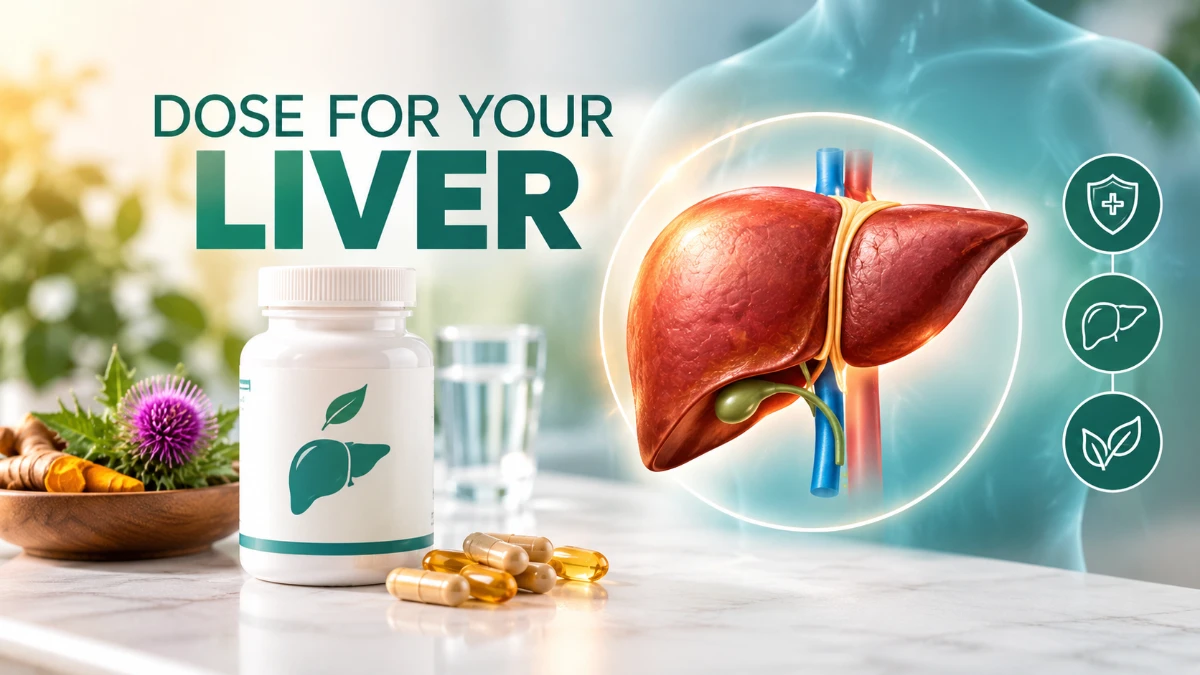
There is no universal safe dose for your liver when taking supplements marketed for liver health. The appropriate amount depends on the ingredients, their concentrations, your medical history, and other medications or supplements you use. Some herbal extracts and high-dose nutrients can damage the liver, while certain products may cause serious reactions even when taken as directed. A label claiming “natural,” “liver support,” or “detox” does not guarantee safety or effectiveness.
Before taking a liver supplement, examine its Supplement Facts label, calculate your total daily intake, and check for overlapping ingredients or medication interactions. People with existing liver disease should seek medical guidance before using these products. Warning signs such as yellowing eyes, dark urine, persistent vomiting, or unusual fatigue require medical attention.
How to Check a Liver Supplement’s Dosage
Choosing a liver supplement dose starts with understanding exactly what it contains. The serving instructions on the package reflect the manufacturer’s recommendations, not a medically established safe amount for everyone.
Start by identifying the serving size and the amount of each ingredient. For example, if one capsule contains 250 mg of an extract and the recommended serving is two capsules daily, your total intake from that product would be 500 mg. However, an extract’s weight does not necessarily reveal the concentration of its active compounds.
Next, compare the label with other supplements, multivitamins, protein powders, and medications. The same ingredient may appear in several products, increasing your total exposure without making it obvious.
Pay particular attention to proprietary blends. These mixtures may disclose their combined weight without revealing every ingredient’s individual quantity, making safety assessments difficult.
When reviewing liver health supplement ingredients, check:
- The amount of each ingredient per serving and per day.
- Duplicate ingredients across multiple products.
- Potential prescription and over-the-counter medication interactions.
- Existing liver conditions or previous abnormal liver tests.
- Evidence supporting the product’s intended benefits.
If important quantities are unclear, do not assume that taking fewer capsules eliminates the risks.
Supplements and Ingredients That May Harm the Liver
Some wellness supplements contain substances associated with liver injury. Understanding supplements that may harm the liver begins with identifying potentially harmful ingredients, their concentrations, and the circumstances in which problems can occur.
Concentrated Green Tea Extract
Green tea extract appears in some weight-management and detox products. Unlike ordinary brewed green tea, concentrated extracts can deliver substantial amounts of catechins, including epigallocatechin gallate (EGCG).
Clinical studies have associated supplemental EGCG intake of 800 mg daily or more with increased liver enzyme levels. However, liver injury has also been reported at lower exposures. The 800 mg figure is not a universal toxicity threshold or a recommended dose.
Kava
Kava is an herbal ingredient commonly promoted for relaxation. Certain kava preparations have been linked to rare but severe liver injury, including liver failure.
The risk cannot be reliably predicted from dosage alone. People with liver disease or potential medication interactions should avoid self-directed kava use.
High-Dose Vitamins and Multi-Ingredient Products
Excessive intake of preformed vitamin A can cause liver toxicity. High-dose niacin, particularly certain sustained-release formulations, may also damage the liver.
These effects depend on the formulation, quantity, duration of exposure, and individual health factors. Combining multivitamins with separate nutrient supplements can unintentionally increase total intake.
Multi-ingredient products present additional challenges because several substances may contribute to an adverse reaction.
| Ingredient or product | Main liver-related concern | What to check |
| Concentrated green tea extract | Possible liver injury | EGCG content and daily intake |
| Kava | Rare, potentially severe liver damage | Formulation and medication use |
| Preformed vitamin A | Toxicity from excessive intake | Combined intake across products |
| High-dose niacin | Potential liver injury | Formulation, amount, and duration |
| Multi-ingredient blends | Combined exposure and uncertain risks | Complete ingredient information |
A supposedly beneficial dose for your liver should never be chosen solely because a product promises cleansing, repair, or protection.
Liver Supplement Side Effects and Medication Interactions
Common supplement side effects may include nausea, bloating, diarrhea, or mild stomach discomfort. These symptoms do not necessarily indicate liver damage, but persistent or worsening reactions should not be ignored.
Early liver injury can produce vague symptoms such as fatigue, nausea, or reduced appetite. Sometimes, liver damage develops without noticeable symptoms, making the absence of discomfort an unreliable safety measure.
Liver supplement medication interactions are another important concern. Certain herbal compounds may change medication effects or increase adverse reaction risks.
Acetaminophen is a particularly important medication-related example. Excessive intake can cause severe liver injury, and people may accidentally take too much by combining pain-relief medicines with cold or flu products containing the same ingredient.
Alcohol consumption and existing liver disease can further complicate medication and supplement safety.
Before starting a new product, ask a healthcare professional to review your medications and supplements. Never independently change prescribed medication doses to accommodate a supplement.
Warning Signs of Possible Liver Injury
Understanding liver supplement safety and side effects means recognizing symptoms that may indicate something more serious than temporary digestive discomfort.
Possible warning signs include:
- Yellowing of the eyes or skin, known as jaundice.
- Dark urine or unusually pale stools.
- Persistent nausea or vomiting.
- Unexplained fatigue or significant weakness.
- Loss of appetite.
- Upper-right abdominal pain or discomfort.
- Unusual itching, particularly with other symptoms.
These symptoms do not prove that a supplement caused liver injury. Other conditions can produce similar changes, and some liver problems initially cause no noticeable symptoms.
Nevertheless, jaundice or dark urine accompanied by illness warrants prompt medical evaluation. Severe confusion, collapse, or difficulty staying awake requires emergency care.
Healthcare professionals may use blood tests and other examinations to evaluate possible liver damage.
When to Stop Taking a Supplement and Seek Medical Help
If a supplement appears to be causing a concerning reaction, stop taking the suspected nonprescription product and contact a healthcare professional. Do not restart it simply because symptoms improve.
Seek prompt medical assessment for jaundice, dark urine, persistent vomiting, or unexplained worsening fatigue.
If you suspect a potentially toxic overdose, obtain immediate professional advice even if you feel well. In the United States, Poison Control is available at 1-800-222-1222.
Bring the supplement container, ingredient list, dosage information, and details of any medications you take. This helps clinicians evaluate possible exposure and interactions.
No supposedly protective dose for your liver can reverse poisoning or replace necessary medical treatment. Do not stop prescribed medications without professional guidance.
A Practical Safety Checklist Before Taking a Supplement
Before choosing a dose for your liver, confirm the product’s purpose, ingredient quantities, total daily exposure, and possible interactions.
Avoid products with unclear formulations or unsupported detox claims. Anyone with diagnosed liver disease should obtain individualized medical advice.
Remember that taking more does not necessarily provide greater benefits. When the benefits are unproven, or safety information is inadequate, avoiding the supplement may be the safer decision.
Frequently Asked Questions
What is a safe dose for your liver?
There is no single supplement dose that is safe for everyone. The appropriate amount depends on the specific ingredient, concentration, medical history, and medication interactions. Some supplements may not be suitable for certain individuals at any dose.
Can liver supplements damage your liver?
Yes. Certain concentrated herbal extracts, excessive nutrient doses, and multi-ingredient products have been associated with liver damage. Natural labeling does not establish safety or effectiveness.
What happens if you take too much of a liver supplement?
Excessive intake may cause digestive symptoms or serious toxicity, depending on the ingredients. Some liver reactions can occur without an obvious overdose. Seek prompt professional guidance if excessive intake is suspected.
Are liver detox supplements safe for daily use?
Not necessarily. Daily use may increase exposure to potentially harmful ingredients, and many detox claims lack convincing clinical evidence. Safety depends on the individual product and your health circumstances.
Can green tea extract cause liver injury?
Yes. Concentrated green tea extracts have been associated with liver injury in some individuals. Ordinary brewed green tea generally produces a different exposure level from concentrated extracts.
Can liver supplements interact with prescription medications?
Yes. Certain supplements may alter medication effects or increase adverse reaction risks. A healthcare professional should review the complete ingredient list alongside your prescription and nonprescription medications.
What symptoms suggest possible supplement-related liver damage?
Possible symptoms include jaundice, dark urine, persistent nausea, unusual fatigue, loss of appetite, and upper-right abdominal discomfort. Seek medical assessment if these symptoms develop.
When should you stop taking a liver supplement?
Stop the suspected nonprescription supplement and seek medical advice if concerning reactions develop. Obtain urgent assessment for possible liver injury and emergency assistance for severe confusion or collapse.